Choosing a Body Warmer supplier in 2026 is not just a price comparison. It is a check on materials, fit, testing, production consistency, and communication. A sample may feel soft under showroom lights, yet perform differently after repeated washing. Small details matter: zipper alignment, seam strength, filling distribution, and whether the size chart matches the finished garment.
Industry reports offer useful context, but not a shortcut. The Outdoor Industry Association’s 2024 Outdoor Participation Trends Report counted 175.8 million U.S. outdoor participants in 2023. That figure signals a broad audience for outdoor products; it does not measure Body Warmer demand directly. McKinsey and The Business of Fashion’s State of Fashion 2025 also describes an apparel sector facing uncertainty and pressure to build resilience. McKinsey fashion analyst Achim Berg has emphasized that resilience matters in a volatile market; this is a paraphrase of his industry commentary, not a direct quotation.
Use that context to ask better supplier questions. Request current test records, fabric specifications, production lead times, and clear defect-handling procedures. Compare samples against written criteria, not memory. Ask who checks each production batch and how changes are documented. A polished catalog is not proof. Neither is the lowest quote.
There is no perfect supplier. A reliable partner should explain limits, flag risks early, and support repeatable quality. This guide examines the evidence buyers can verify before placing an order. One caution remains: public market data rarely isolates Body Warmers, so supplier selection still requires product-level checks.
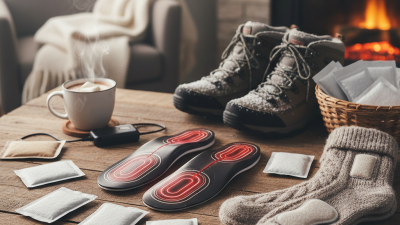
Before contacting suppliers, define exactly what “body warmer” means for your project. Is it an insulated vest, a disposable heat pack, or a rechargeable heated garment? These products require different materials, components, packaging, and quality checks. Small details matter.
For a heated vest, specify the intended user, climate, fit, fabric, heating zones, power source, and expected operating time. Note whether the garment must be washable and how its controls should feel with gloves on. For an insulated style, describe the fill, lining, weight, pocket layout, and desired warmth. Fit changes everything. A sample that feels comfortable over a T-shirt may become restrictive over a sweater. I have seen sizing assumptions need revision after wear testing, so include the intended clothing layers.
Then turn the product brief into sourcing requirements. State your target order quantity, acceptable sample timeline, delivery window, price range, and packaging needs. Ask suppliers how they inspect materials and finished goods, and request relevant test records for components and performance claims. Compare samples using the same checklist: measurements, stitching, comfort, warmth, and finish. Be specific about tolerances; “good quality” is too vague. Your first specification may still miss something, so leave room to refine it after handling samples.
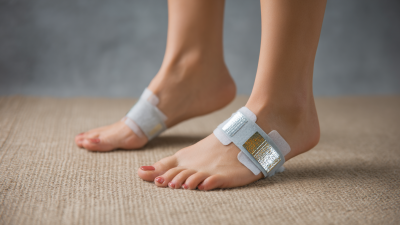
A body warmer may come from a garment factory, an insulation specialist, or an electronics-focused manufacturer. Garment factories usually handle pattern cutting, stitching, size grading, and final assembly. Insulation specialists can advise on fill weight, quilting, and heat retention. For powered styles, ask whether the supplier can integrate heating panels, wiring, and battery pockets in-house. Trading companies may coordinate these steps, but confirm which factory performs each operation.
Textile Exchange’s Materials Market Report 2024 estimates that polyester made up 57% of global fiber production in 2023, out of 124 million tonnes. This is useful context when comparing shell fabrics and synthetic insulation, not proof that one fabric suits every design. Ask for fabric composition, insulation weight, and test results for seam strength and colorfastness. For heated products, request documented checks of temperature consistency and electrical safety. Ask for proof.
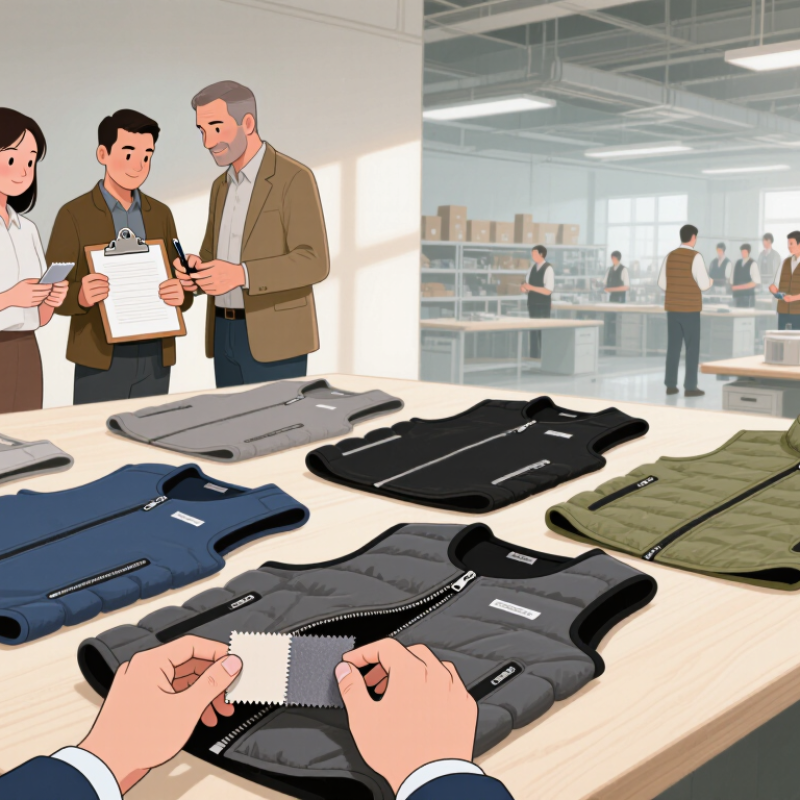
Review the factory’s actual line, not only its sample room. Can workers secure insulation evenly around armholes? Are heating elements positioned consistently across sizes? Request a pilot run and inspect several units, including one after washing if the care label permits it. Still, samples can flatter. Production records, defect handling, and realistic lead times reveal more than a polished prototype. A supplier may be strong at sewing but lack reliable control over electronics or insulation sourcing. Probe that gap before placing an order.
Start with product-specific evidence, not a polished catalogue. Ask for current test reports from a qualified laboratory. Reports should identify the exact warmer model, materials, test methods, and measured results. Confirm that tested samples match the products offered for shipment. Details matter.
For heated products, review temperature and duration data under stated test conditions. Ask how performance changes in cold environments and whether results vary between production batches. Check packaging warnings, instructions, and material disclosures against the requirements of your destination market. Applicable standards can differ by product type and location, so verify them rather than relying on a supplier’s broad compliance claim. Request batch records and a clear process for investigating defects. A neat report can still miss problems found during ordinary use; that deserves a second look. If possible, inspect samples for consistent seams, intact packaging, and legible instructions. I would also ask what happens when a shipment fails inspection. A vague answer is useful information, too.
Assess product quality, safety, and compliance evidence before making a sourcing decision.
Example assessment rubric, not measured supplier or market data. Score each area from 0 (no verifiable evidence) to 5 (complete, current, independently verifiable evidence). Check product-specific requirements for your destination market; for example, EU PPE Regulation (EU) 2016/425 applies when the product is marketed as personal protective equipment.
When comparing body warmer suppliers in 2026, ask for a cost breakdown, not just a unit price. Request separate figures for fabric, insulation, trims, packaging, sampling, and freight. A low quote can hide setup charges or costly color minimums. Small is not always cheaper. Compare the landed cost at your expected order size, then ask how prices change if you reorder only popular sizes.
Minimum order quantities should be clear for each style, color, and size range. Ask whether fabric must be purchased in bulk, and whether leftover material can support repeat orders. Check sample costs and approval timing, too. A spreadsheet helps, though it will not catch every surprise. One useful question is: what changes if the first order is smaller than planned?
Delivery capacity needs evidence. Request a dated production schedule, monthly output for similar insulated garments, and recent on-time shipment figures. UNCTAD’s Review of Maritime Transport 2024 reported that weekly container-ship transits through the Suez Canal fell 67% from their peak in early 2024. That disruption shows why factory readiness alone cannot guarantee arrival dates. Compare the supplier’s production lead time with its booking and shipping plan, and leave room for inspection or delays. A confident promise is not a capacity report. Ask for milestones you can verify.
How to Choose a Body Warmer Supplier in 2026?
Verify Supplier Reliability and Finalize Your Selection
Ask shortlisted suppliers for recent production records, inspection results, and on-time delivery figures. Compare these with purchase orders, not just presentation slides. Request references from buyers with similar order volumes. The World Bank’s 2023 Logistics Performance Index assesses 139 economies across six areas, including shipment tracking and timeliness. Use those same areas to question a supplier’s shipping plans. Who monitors delays? How quickly are problems reported?
Material claims need equal scrutiny. Textile Exchange’s Materials Market Report 2024 estimates that global fiber production reached 124 million tonnes in 2023, with polyester accounting for about 57 percent. For a body warmer, request the insulation’s fiber composition, weight, and batch-level traceability. Check labels against test documents and sample garments. Feel for cold spots around seams. Small flaws matter.
Visit the factory or arrange an independent audit when practical. Confirm machine capacity, shift patterns, and quality checks on the production line. Then place a pilot order and inspect garments from different cartons, not only the best-looking sample. A spreadsheet can miss things. I would also record agreed tolerances, packaging details, and remedies for defects before signing. Some suppliers may promise more than their production floor can deliver; verify the promise under real order conditions.